THE ART OF THE POSSIBLE

I am always fascinated by the polls on the job-approval of the president of the United States. It moves up and down depending on the latest crisis and what the president might have been able to do about it.

What I find intriguing about the polls about this president is how many people who were excited about his being elected have been disappointed in his performance.  The energy was high in 2008.  It was less in 2012, but still there were people who believed that he could do something that would help improve the lives of people.

Now, I know that he made lots of promises when he was running for office. That is the nature of American political elections—promises. Politicians get elected on the basis of the future that they describe and the promises they make to bring about that kind of future.

But, the fact is, leading isn’t so much about making promises as it is achieving something. Someone once said that politics is the “art of the possible.” The ability to govern is related to accomplishing that which can be accomplished. It is not about fulfilling all the promises that are made in order to get elected.

And the ability to achieve the possible is determined in large measure by many factors that are not in the control of the one who makes promises to motivate our voting for them. The diversity of opinions that make up a free political process forces leaders to propose, listen, adjust, compromise and achieve what they can. The shrinking globe we live on creates political realities in other countries that limit the ability of our leaders to make a difference. Wise use of political power on issues where they can have an impact is important for leaders

So, I stay fascinated with the polls, but would wish people were a little more gracious toward those who are working to practice the “art of the possible.”
TRAVELING LIGHT

I awoke at the normal time. Stumbled into the kitchen, ground the coffee beans and put on the coffee. Feeling sluggish, I splashed cold water on my face. Did my stretching routine and went out to get the newspaper. Feels like weights on my feet. Did I gain weight? Go into the scales and weighted the same as always. 

Then I opened the newspaper. A police officer had been killed last night. Then it hit me—I hadn’t gained weight that would show up on the bathroom scales—it was a weight that rests in my heart. I had watched the news last night and the fighting in the Middle East was escalating. The governor of the state was declaring that the same-sex marriages that took place last month were not legal. More mass killings had taken place overnight.  

The weight I was carrying around was real—but would not show up on the scales. Are there any exercises that help me shed some of this kind of weight?

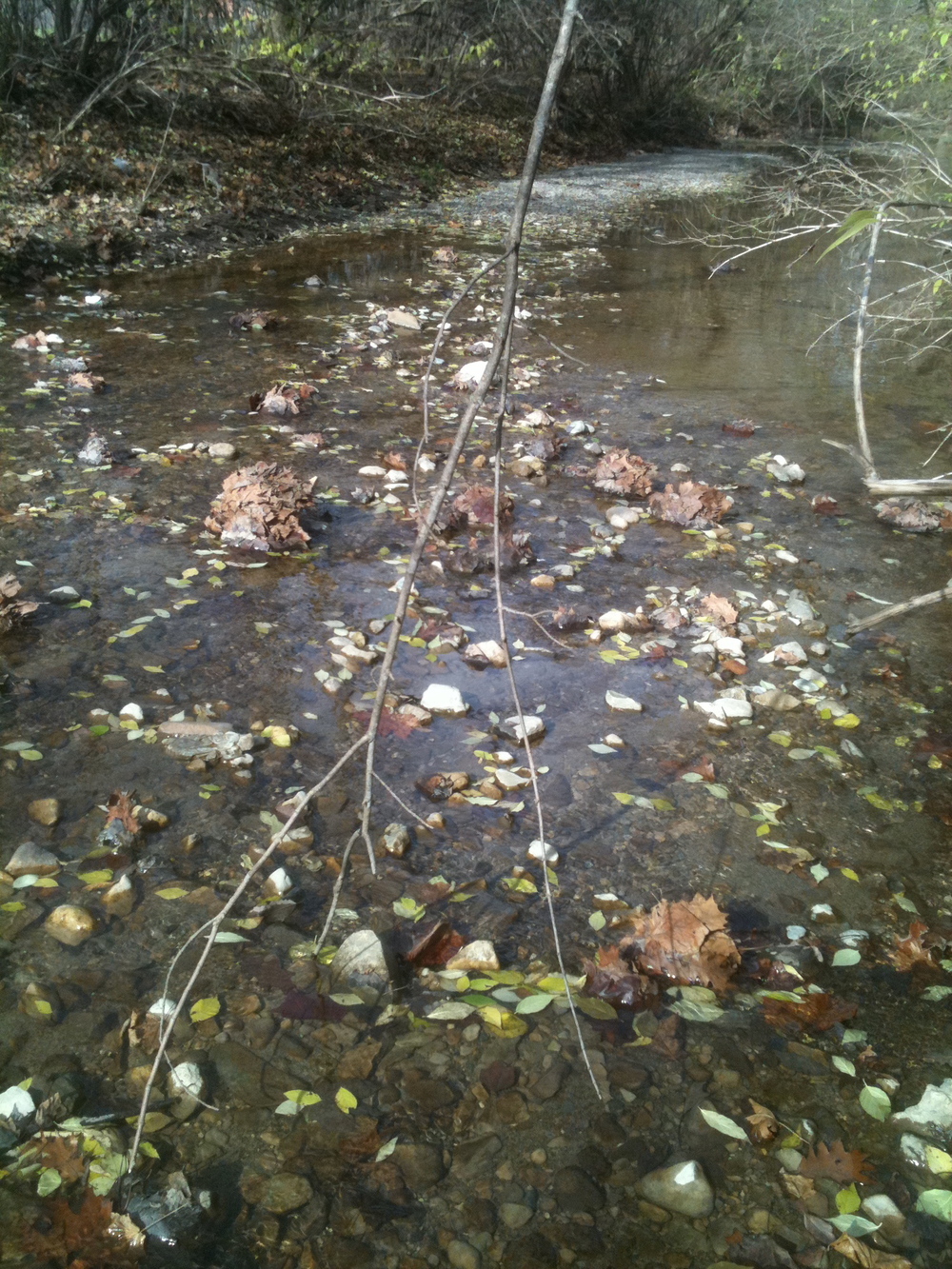
I have a few. Maybe you have some you would share. Mine include meditation where I seek to rest in a power greater than myself. I imagine the worries written on pieces of paper, taking them one at a time and setting them beside my chair. I hike in the woods and name the worries, scattering them among the fallen leaves. I hike beside the creek, putting my concerns on sticks and leaves and let them be carried down stream. I feel my body pressing on the bed, feeling my physical self holding my heart, strengthening my heart’s capacity to carry the weight that I can’t lay down. 

I have more energy and find that traveling light enables me to get more done. And it helps me open my eyes to beauty and grace that shares the globe with the pain and suffering. Loving life is easier when we are not weighted down with the burdens of all the world.

LIVING LARGE

The human spirit is a fickled energy. Sometimes it wants to curl up into a ball and hide from itself and the world. We like to build tiny houses so that the soul doesn’t have too much room to wander around and get lost. We want to play our cards close to the chest. 

And there are other times when we want to run outside and dance in the rain. The spirit feels confined by the predictable and the routine. We are sure that there must be more and our heart will burst if we can’t stretch our souls to embrace the whole world. 

How do we free the spirit to fly?  How do we face our fear of falling and climb to heights we have not experienced before? 

I wish I knew. I am sure it is different for each of us. For me, it helps to accept myself as fickled and learn to embrace the place I am. When I am tired, when there has been too much stimulus and too many changes all at once, I try to give myself permission to draw in. I try to be conscious of the my boundaries and the need to draw them with a darker pencil. I try to accept this is a time to live small, to steward my energy and protect my soul. 

And then when I get restless, when the space begins to feel suffocating, I start testing my spirit. How large does it want to live? What tickles my fancy? Is there a play we can go see?  How about a movie? A concert? Friends to invite over? Day trips to explore unfamiliar places? Longer trips to far away places? Service to provide? 

Since the days we have to live are relatively few, and the world we have been given is excessively large, I want to live large as many days as I can. I need tiny spaces to rest and gain strength, but the fantastic world is my dream.  

COUNTERINTUITIVE

When we get anxious, we often find our body wanting to speed up and get more done. Anxiety functions as energy to try to accomplish something that will reduces the anxiety.  

This is especially true when we have lost something or someone significant. The absence of a center-piece of our lives makes us feel anxious. So, it seems normal to get busy and try to replace what is gone with something else that will function as a stabilizing presence for us. 

But, there is a problem with this strategy. Anxious energy is adrenalin that helps us get through a crisis, but it does not function for long term solutions for our emptiness. We frequently run out of energy before we have been able to discover another orienting center for our lives. When that happens, we become exhausted, maybe even depressed. 

So, I suggest something that is counterintuitive.  I suggest that when you are in the process of grieving loss (that is, learning to live without someone or something important) don’t hurry-up but slow-down.  When you are finding your way forward one step at a time, you have to think about your decisions more than you do when life is even and stable. The emotional stress of walking carefully, evaluating each move, determining if the direction forward is what you really want to do—these all take energy.   

Because you are using more energy to live each day, it is critical to take time to rest.  When you pace yourself, when you stop and give your body and mind a respite, they will serve you better for longer.  And working your way through a loss to new life takes longer than many other types of work. 

So, be gentle with your self and  give yourself energy renewal time. It will make a big difference.

THE WAY FORWARD

Sometimes the way forward is clear. You made a decision to do a certain thing: go to school, accept a job, have a child.  The decision set the path. Now how that job is done, that child is raise, that school is navigated may not be clear, but at least there is some direction.

But, the way forward isn’t always as clear as we would like. We may feel as if we are dropped into the middle of a wilderness. We don’t know how to get out. There are no paths to follow. We have no compass to give us direction. We are not even sure what getting out of the wilderness would look like. 

This is what happens to us when we have lost something that has given us a clear sense of ourselves, our identity. When we lose a parent, a child, a spouse, a career—those things in our lives that are central to how we know ourselves—we often feel lost and unable to make our way forward. 

How do we go forward when this happens? First, it is always helpful to know that if the path forward is clear, it may not be your path. Our choices, our decisions and where they lead only become clear in the living of our lives. We don’t know how each day will turn out.  

Therefore, the way forward is one step at a time. We don’t know if the direction is right so we take a step and see where it leads us. Then we take another one. If we take a mis-step, we back up and try another direction—one step at a time, not beating ourselves up for our mis-step. This is the way forward in life. 

Helen Keller said, “If life is not an adventure, it is nothing at all.” Living life one step at a time takes courage. Take heart!! Be kind to yourself. See where the adventure leads.