PRAYER

We sat around a primitive wood table, embraced by the late spring evening.  The deck was littered with life, potting soil, herb pots, bird feeders. We held hands and bowed our heads. The aroma of a quiche filled with fresh kale from her garden teased our senses. He prayed a simple prayer of thanks for food, for friendship, for time together. 

This tender act is repeated time and time again throughout the world as people gather to break bread and share soulful conversation together.  But this time it seemed special.  He is stable after a long battle with a blood cancer.  He had months of chemo therapy and a stem cell transplant. He struggled with life and death and now feels strong and able to live a full life each day. 

I don’t know how often I race by these moments, but this time I paused and felt the spirit of life hold the four of us as we shared the stories of life and family, of hopes and disappointments. And I want to rest in that memory. Thanks for that time, those hands, that food, that evening of awareness and appreciation.  These moments in life are precious.

REVENGE

I have been thinking a lot about revenge and retribution these past days. A young man who felt rejected decided to take our his revenge on people and went on a killing spree, killing 6 people. 

What is it that drives this feeling? Retribution and revenge are both attempts to right wrongs by making someone pay for the damage that was done. It seems to grow out of an impulse not uncommon to most people that when someone is hurt, someone else needs to hurt to make it right. When someone is wronged, it can only be made right by making them pay with some kind of suffering. 

Something in us seems to have an impulse for people to suffer if they have caused others to suffer.

A couple of things have crossed  my mind as I have thought about this. When does attack and counter-attack stop? Most of the time when we feel like we want retribution, we assume that another has wronged us.  But, do we normally act to wrong another?  They may take our actions as wrong, but do most people intentionally act to wrong someone else? 

Or do we often take out our wronged feelings on other people rather than the one who has hurt us? Sometimes when we are wounded by some behavior at work or in the world, we don’t take our our feelings on the boss (that could result in our losing our job), but we take our our revenge on the dog or on people we love with whom we live. And sometimes we may take our our hurt  on ourselves, subverting the our very life spirit while we carry around the hurt in our heart. 

So, how do we stop the violence that grows out of a sense of being wronged? Do we give up our passion for justice when we see what we believe is an injustice?

A couple of thoughts—and maybe you have some to share.  Share your hurt with someone you trust who can listen to your pain.  Maybe the shared hurt won’t longer so long in the fiber of your being.  And pray. Maybe the God who resides deep inside you can help you forgive the pain so you are free to live without it’s eating away like a cancer. 

These are tough issues. Have any ideas?

SOUL WORK

Who am I? This is a  soul question. Young people struggle with this mightily as they seek to sort out their unique identity apart from their parents. The question gets accentuated as the attraction of the social groups increases. Frequently the identity claimed by a young person is shaped more by a peer group than simply grounded in a clear self-definition.

But, the problem of self does not disappear when the person has chosen another social group to affirm what they like about themselves at a particular point in life. The spiritual journey of soul is an ongoing life process. Social groups are so powerful that it is often hard to keep one's unique understanding and values distinguished from those of any given group. Keeping clear one's enduring values that reflect one's character requires continual value clarification.

This is done in the internal debate that the multiple values inside of us wage. We want to be unique and distinctive at the same time we want to belong to a group of others like us. We want to be loved and commit ourselves to care for and with others and at the same time, we want the freedom to do what we want. We want both companionship and solitude.

The soul work we each do in our daily spiritual disciplines of deciding is to determine which of the conflicting values seems most appropriate at any given time. We have to chose between the claims of the heart for self-care and pleasure or other-care and the pleasure we get from giving love to others.

Fortunately, this is part of what makes life such an adventure. Unfortunately, this is what makes it so hard to always get it right. Or maybe that is a fortunate consequence of the spiritual struggle. It makes us all humble and thus open to others who are making daily choices as well.  And that humility enhances the depth of community.  That community of humility and grace is a gift.

AN UNWRITTEN LIFE

They were con-artists. "The Brothers Bloom" started their lives as peripatetic foster children. At the ages of 13 and 10, Stephen and Bloom pulled their first con. The older (Stephen) of the two wrote a scenario and wrote roles for himself and his little brother. It was then that little brother Bloom started living a scripted life.

But, twenty-five years later, Bloom decided he wanted out of the con business. He wanted to live "an unwritten life"--not just the life his brother wrote for him. He wanted to live life as it comes, to respond to life as it happened, not plot out each episode according to some idea about what they could get out of it.

I think this is a perpetual conflict in life. What do I do that is fulfilling someone else's dreams? What do I do that satisfy my own desires? How much of who I am is what others have written and how much of my life do I write as I go?

This journey of discovery often begins around age two as children assert their "no" to a parental "yes". It is intensified in early adolescence as piercings and body art flaunt a "unique" self over against parental expectations.

This internal struggle between other's stories and our own story waxes and wanes through life as changes threaten our social identity or our soulful restlessness shakes our internal clarity of ourselves. The changes outside and inside call the self to this soul work of how much of my life is "I" and how much of my life is "we". The spiritual life is the sorting out who we are who we are in relationship to the values that shape our community.

We are all seeking balance between the pre-written lives of someone else's plot and living our own "unwritten life."

THE BRAIN

My son-in-law shared advice he sometimes gives to others—and has to give himself from time to time as he functions as a stock broker.  It is advice that make sense to me. “Don’t expect other people to think with your brain.”

 I have thought about this a lot the past few days.  We can guarantee that we will spend a lot of our life disappointed if we don’t follow this advice. After all, the way our brain works is what we know to be most familiar. The way we see things is surely the way things really are. Why wouldn’t others think with our brain?

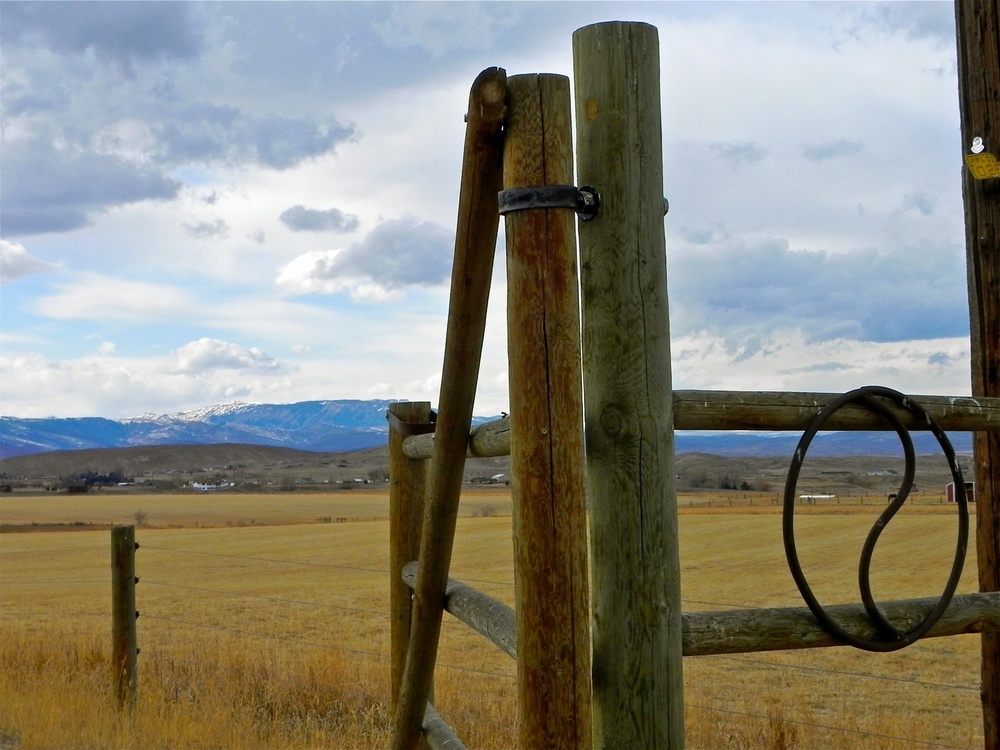
 But, while our brains all operate with the same electrical impulses and pathways, the way they are used is as various as the kinds of circumstances we have lived in and that we live in.  When Deb and I were in Cody, Wyoming a couple of years ago, we stayed in a guest house on a ranch several miles outside the town. The closest neighbor was a couple of miles away. The sky was vast and explosive, roiling with wind swept clouds and crystal clear stars. Silence settled on the night as a warm blanket.

 Spending time in that environment where a person spent a lot of time in their own company, helped me see how different the brain works than it does when I am in a swirling, chaotic, traffic clogged city. My brain feels different in the silence of wide open spaces than it does where the music blares on my neighbor’s deck while they are taking a midnight soak in the hot tub. 

 I understood how the rugged individualistic brain on the prairie was essential for survival. But, it doesn’t seem as virtuous when  I am trying to sleep in a  neighborhood where the actions of each impinge on the sleep of the other.

 Not sure how much I can think with the brain of another, but I think I will be a whole lot happier if I don’t expect others to think with my brain.