(UN)HAPPY HOLIDAYS

I recently led a class on preparing for the holidays.  A dozen of us gathered to share our anticipations and our anxieties.  As we talked we discovered that almost everyone there was struggling.  Most were not really looking forward to the holidays.
  In the stories were shared, most were dreading the holidays because they anticipated the sadness and loneliness that is part of them.  Most experienced the holidays as times when they missed something or someone really important to them:  deceased family members; children away from home; hopes for resources to do more than they were able to do; traditions that were no longer possible because of the changes in life or location.
Holidays are times when we seem to focus on accumulated experiences that can’t be replicated. (Or, more accurately, the memories of experiences that had acquired special meaning but can no longer be duplicated.)  While our life is full of such experiences, holidays seems to be a depository for more focused and special memories.  Hopes for happiness are exploited by a culture that uses our longings for belonging to sell us promises provided by its products.  We experience the stress of trying to be in the holiday spirit.
 But, I think that holidays are more than about what we have had and lost.  I believe they are open times for the welcoming of new and interesting possibilities for the future.  To welcome and embrace that open space for the future that has been given to us by the loss of things the way they were, we have to grieve the losses so they don’t control our way of looking at the holidays.
 Grieving the loss of the world the way it was frees us to embrace the world that is coming.  As you face the holidays and feel dread or sadness overtaking your spirit, take time to look at what has changed, to name that which is no longer a reality, to remember  the good that you have received, to forgive the past for not being permanent, and play with new ways of celebrating, developing new traditions that affirm what you truly believe about the holiday’s meaning.  Holidays are about relationships, loved and lost, and wherever we are, new relationships and new ways of expressing our life together are all around for us to explore.  
 

CONFLICT AND LOSS

As I have worked through the years with issues of change and loss, I have come to understand that there is a direct relationship between conflict and loss.  Conflict between people is almost always about someone losing something.  When conflict occurs in organizations, some in the group will lose something that matters even as others may gain something that they feel is more important.  The inability to grieve loss contributes to the intensifying of the conflict.  If you would like more on this topic, I have just published a book with my colleague and friend, Bernie Lyon.  It is called, "How to Lead in Church Conflict: Healing Ungrieved Loss" (Nashville: Abingdon, 2012.)  It is available at Abingdon Press or on Amazon.com.  In the book we explore a psycho-dynamic perspective on group life and how a leader's ability to be present with a "heart of flesh" can help a group grieve losses and open themselves to new ways of living life together.

HATE

I am reading "Love" by Toni Morrison.  I came across a scene where Bill Cosey has died and the Cosey girls fought over his coffin.  "Standing there, one to the right, one to the left, of Bill Cosey's casket, their faces, as different as honey from soot, looked identical.  Hate does that.  Burns off everything but itself, so whatever your grievance is, your face looks just like your enemy's." (34)
Hate has a way of sucking all the life out of those who share it.  The unique gifts of insight and caring that make us who we are disappears and the rigid stare of hate glares from each face.  Thus, hate replicates itself. When we look into the face of others, we see mirrored back our own stony passion.
Something to ponder.


CHURCH GROWTH AND GRIEF

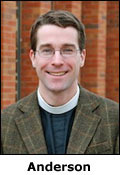
This came from a friend. I find that I disagree with the premise of Mr. Anderson. Grief is not killing the church--our fear of grieving is killing the church. My colleague Bernie Lyon and I will publish a book in April, 2012 "How to Lead in Church Conflict: Healing Ungrieved Loss" (Abingdon) and in that book we define grieving as "learning to live again in the absence of someone or something significant." Conflict over the future is grounded in our fear of what we will lose in the future. Our assumption is that grieving well is the way to move forward toward the world that God is creating.  Churches who embrace the future are ones that are able to name their losses and pain, express their anger over the loss of their identity, remember well enough that the past is memorialized and human, confess their guilt and shame and embrace the forgiving grace of God that frees them to move forward.  Then grateful hearts are freed to imagine and play with new  possibilities and the church can not only vision a new future but can access the energy to move toward it.  The future is grounded in the soil of the past and grieving is the way churches discover the germinating seeds that will become their future.  Our advice is therefore that congregations grieve their losses as a way of welcoming the future.

How do you think grief effects the vitality of church growth? 

 http://www.churchleadership.com/leadingideas/leaddocs/2011/110817_article.html
   

SIGNPOSTS

Hiking in the woods, 10 degrees cooler than it has been for a month--30 % less moisture in the air.  I was hiking more erect, without the weight of the heat and humidity.  It felt more alive, noticing the morning light tickling the trees, listening to the little-bit-tired and stressed leaves scrathing each other.  Then, out of the corner of my eye, a large yellow maple leaf fluttered to the ground.  I glanced up and here and there saw a few more leaves turning brown and yellow.  Still August, but all the signs are there--shorter days and the slightly turning leaves--whispers of what is to come.  

This is the way most change in life occurs--with subtle and hard to notice shifts in the wind or the color.  We hardly notice them till we slow down and look more carefully, listen more closely, taste more fully.  Then we see the change.  Then we see the way some things are fading, making room for new experiences.  These subtle signs of change are gifts when they are noticed--occasions to look back at the summer and savor the gifts--the long and lazy days, the vine-ripe red tomatoes, the herbs from the garden, the cold beer after a hot lawn mow.  Gifts of the warm days of summer.  And this time of change is also a time to anticipate--to imagine the cooler nights and the clearer days, the emerging colors of autumn's decay, the deck parties and fires in the fire-pit.  On the cusp we celebrate memory and hope, sentimentality and imagination.  

What a gift--the slowing down and the noticing--the recalling and the dreaming.  Loss is not always easy, but sometimes it opens us up to  what we have received and what we look forward to.  When we grieve well we notice the signs and we can open ourselves to the new that is emerging.